

Voyansi origin: Bridging the real and digital with BIM
Daniel Biaggi shares how Voyansi connects reality capture, BIM coordination, and field layout inside Hexagon Building Solutions, so projects move from verified conditions to confident installs.
Scan-to-Plan for renovation projects: How architects benefit
Renovation projects are risky when they rely on outdated drawings and guesswork. Scan-to-Plan uses 3D laser scanning to turn existing buildings into accurate digital plans so architects can design with confidence, reduce surprises, and keep renovation projects on schedule and budget.
MEP fabrication: Bridging design and installation
Off-site MEP fabrication transforms how subcontractors deliver projects. By building mechanical, electrical, and plumbing systems in a controlled shop environment (guided by a coordinated BIM model) and then installing them on-site, teams can eliminate clashes and delays. The result? Faster schedules, lower costs, improved safety, and higher-quality construction.
Plan it in design: Firestopping in healthcare construction
Firestopping is critical in hospitals – yet too often it’s an afterthought. Learn why modeling firestopping systems in BIM during design leads to safer, more compliant healthcare facilities with less rework and delay.
Construction visualization and construction monitoring: What’s the difference?
Build it digitally first to remove surprises, then verify as you go to keep work on plan. Learn how visualization and monitoring complement each other to cut delays and rework.
Construction visualization for general contractors: Build it digitally first
Building a project digitally before breaking ground? Construction visualization is how general contractors spot problems early, prevent rework, and keep jobs on schedule by using detailed 3D/4D models to coordinate work.
Construction modeling for general contractors: a game changer
Construction modeling uses detailed BIM models to let GCs virtually build a project on screen before doing it on site. By coordinating in 3D, contractors catch clashes and errors early, dramatically reducing RFIs, change orders, and delays in the field.
Reality Capture and Deviation Analysis: benefits for construction project managers
Reality capture and deviation analysis turn changing site conditions into measurable facts. For construction PMs, that means fewer RFIs, less rework, and steadier schedules across coordination and closeout.
Five benefits of VDC management for pre-construction
Vdc management builds the project virtually first to cut clashes, RFIs, rework, and delays so field installation is safer, faster, and more predictable.
Deviation Analysis in construction: A guide for General Contractors
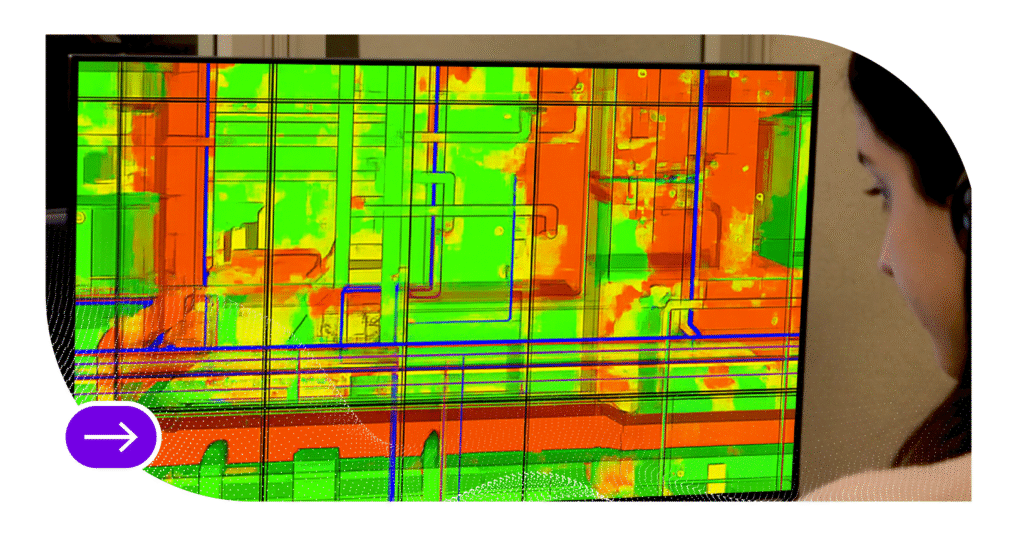
Deviation analysis compares high-density reality capture (laser scans) with the coordinated BIM to quantify drift from tolerances. Run routinely in high-risk zones, it flags out-of-spec work early so GCs can adjust before close-in, reduce clashes and rework, and deliver credible as-builts. This guide explains the workflow, payback, and how to start
